When Katherine Maxwell-Rose’s son became aware of climate change, she realised that eco-anxiety was something many children were experiencing. She finds out why this is a normal response and how we can support our children and ourselves in the face of an ongoing crisis.
STORMY DAYS
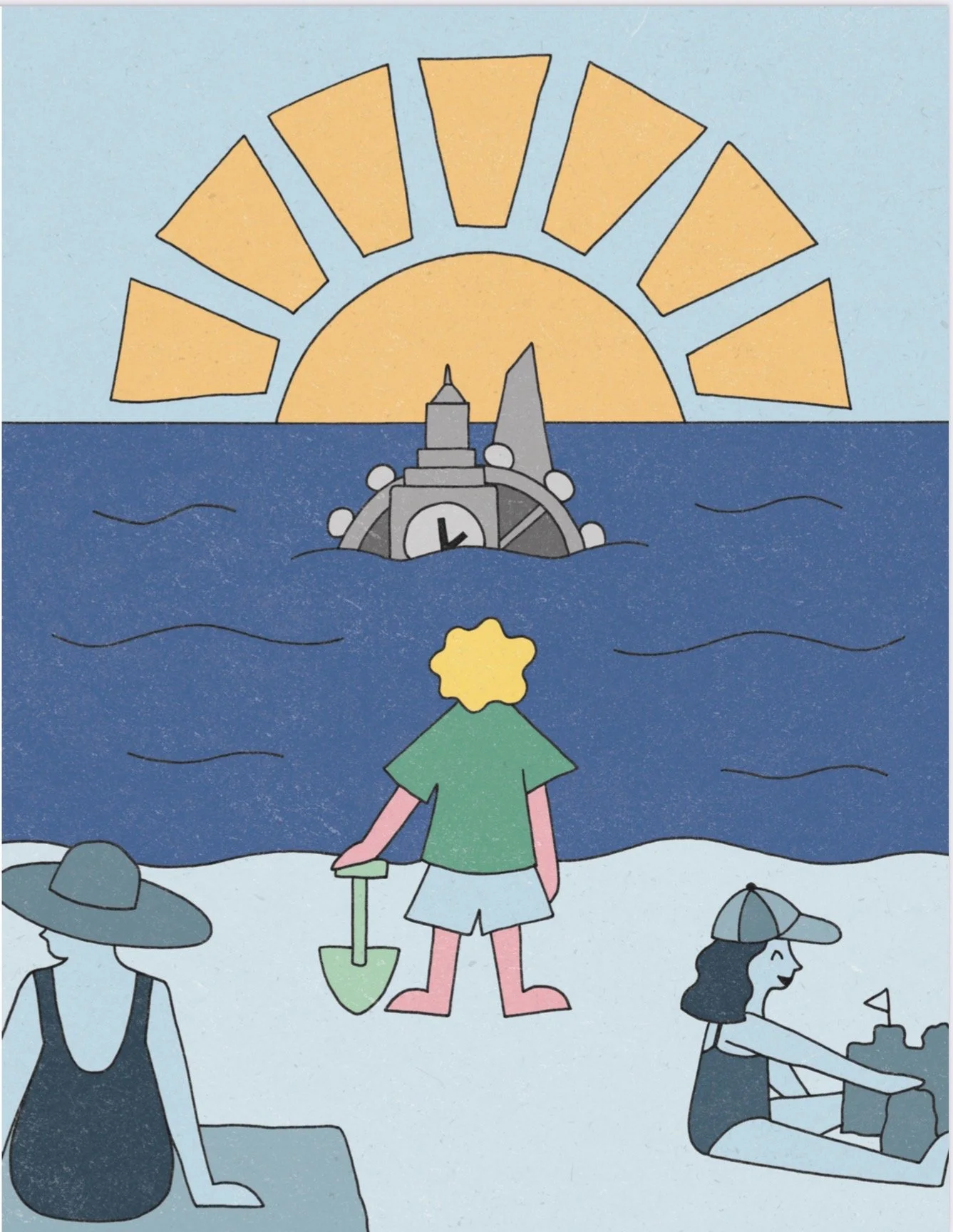
On a rainy day last October we took our newborn baby and four-year old son, Jesse, to an aquarium. My son loved running around looking at the fish, the crabs, penguins and sharks. Towards the end of the tour, however, he stood frozen to the spot while he watched a final experience – with footage of water gushing down into his beloved London Underground and of the Houses of Parliament submerged in floods. The menacing voiceover told my little boy that this was climate change – and it was coming for the city he adores. Everything in his body changed as the tears began flowing and questions poured out of him. How was this going to happen? Why? When? The afternoon had irreversibly changed. He wanted to leave immediately. The next day, he spontaneously burst into tears again and asked: ‘But where will we live when the whole world is flooded?’
It was heartbreaking, unbearable and ultimately a life-changing moment for my whole family. This was the first time the wider world encroached on Jesse’s small sphere and disrupted his existence. It was almost impossible to believe that my young son was already experiencing climate-anxiety, and yet, of course, he was.
Sadly Jesse is by no means alone. In one of the first large-scale global studies on the issue, researchers asked 10,000 16-25 year olds in ten countries around the world about their thoughts and feelings on climate change. An astonishing 84% stated that they felt at least moderately worried with 50% feeling sad, anxious, angry, powerless, helpless and guilty. Nearly half of those asked said that their feelings about climate change negatively affected their daily life and four in ten respondents said they are planning not to have children because of the crisis.
THE REALITY
Climate psychologists are clear to point out that eco-anxiety can not be defined or pathologised as a mental health disorder. Rather it is a healthy, rational response to the gravity of threat facing the world.
Acknowledging this reality, ironically, is something which can be reassuring to children. Caroline Hickman was the lead author on that study and is also a clinical practitioner who facilitates ‘climate-aware’ therapy to help people (including children) engage emotionally with the crisis. She explains to me that children feel more anxious and isolated when their feelings are not being validated.
Hickman says: ‘The most important thing for children is – don’t lie to them. Tell them the truth. Explain to them that you don’t have all the answers but say to them, “You are not alone. We’re not going to abandon you. We’re in this together.”’
The comforting answers we long for are simply not there and giving our children platitudes will only erode their trust in us. Hickman says: ‘I speak a lot with children who are more hurt and angry because their parents won’t speak with them about it than they are worried about climate change.’
The study discovered that government inaction on climate change has exacerbated children’s sense of abandonment and anger. When parents and carers also deny the seriousness of the situation, and fail to act, their stress is intensified and our relationship with them can become damaged. Hickman goes so far as to suggest we, as the older generation, need to apologise for our culpability in the crisis. Saying sorry to our children can be significant for them because it proves our authenticity.
ANXIETY INTO ACTION
Clover Hogan is the 22-year-old founder and director of Force of Nature which empowers young people around the world to turn climate anxiety into action. She describes how we can work with rather than against eco-anxiety: ‘To keep those feelings from tipping into paralysis, we need to connect those feelings to a real sense of agency…We need to think, ‘How can those feelings be the driving force behind my activism?’
Force of Nature has recently been part of devising the interactive website, HoldThis.Space which empowers users to explore their emotional response to climate change and discover how to use those feelings to drive action. On the platform, Ellyana, a secondary school student discusses how she was able to move past her feelings of despair: ‘I try not to get so bogged down in what I haven’t and can’t do but to be a proper functioning member of society who can help others. That is what the climate movement needs, positive, empowered people who have hope for the future… When I am hopeful, I can see that I matter and this makes me want to do more.’
Collective and local action with tangible benefits can be useful and guard against burnout. The involvement of parents, carers and adults in these actions is a powerful demonstration to young people that we also care and that they do not have to go through this alone.
Emphasising the role of governments and the need for systemic change has to be part of the conversation so that we don’t overburden children who already feel hugely responsible for the future.
Any actions we take have to be balanced with looking after ourselves. Hickman is clear to point out the importance of ‘inner’ as well as ‘outer’ activism: ‘We need to develop emotional resilience. We need to educate children and young people about mental health, how to deal with their complex feelings, how to communicate… and also how we deal with our own feelings of multiple uncertainties.’
RADICAL ACTION
For Katie Day, activist and Artistic Director of The Other Way Works theatre company, climate change is a live conversation in her family: ‘It’s a big issue for us so my husband and I constantly talk about it.’
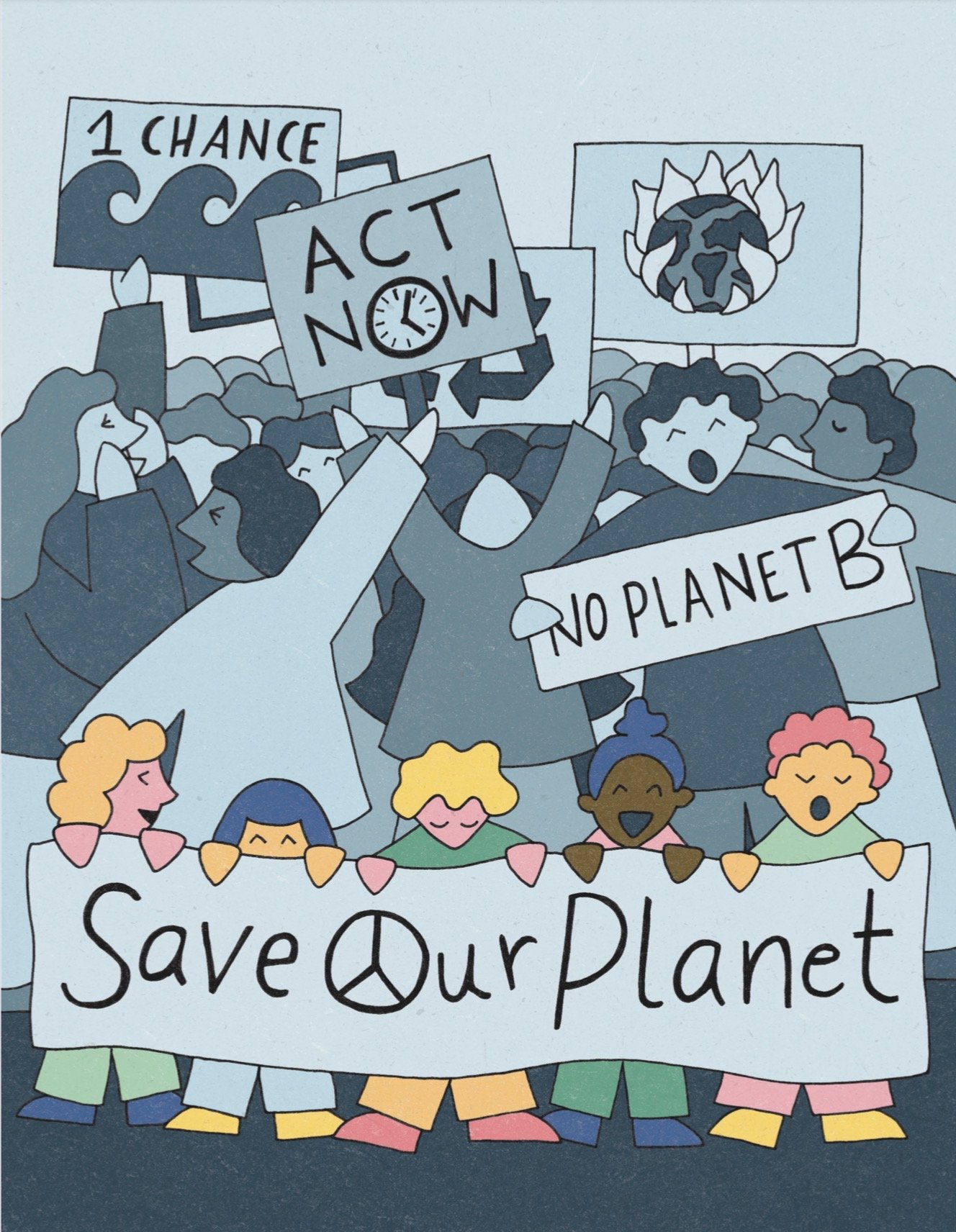
Her ten-year old daughter, Vashti, has regularly been attending the climate schools strike on Fridays along with her three-year old sister, leading to the family joining the climate rallies at COP26 in Glasgow: ‘My children are going to be the ones who have to grow up in this world. It was important for them to be there. To see they aren’t the only ones who care about this issue. I wanted them to know that they have it within their powers as citizens to take action. I didn’t want it to feel frightening or alien. Vashti is proud she was part of it. It gave her ownership over the issue.’
It was also an important experience for Day: ‘I felt I was in my body doing something with a purpose. I was demanding climate justice. I was in the right place at the right time. It was galvanising to be around so many people who cared so much, to feel less isolated.’
Day has recently been developing an interactive storybook with games and puzzles which children aged 8-11 can play with their parents, carers, grandparents. It draws on research which highlights how children can be effective persuaders to older generations about climate change: ‘One of the ideas behind the project is to encourage intergenerational conversations. I also wanted children and their families to come up with solutions and actions they could take together, to prevent children feeling like they have to do it all alone.’
THE BOY IN THE AQUARIUM
To return to Jesse standing in that aquarium, overwhelmed with worry, all I wanted to say was that it was all going to be ok. But seeking to dismiss or cure eco-anxiety could actually be detrimental. Jesse’s feelings are rooted in empathy – to get rid of these strong emotions would be to crush his morality. Instead I have learnt that his compassion must be praised, validated, and encouraged into resilient, sustainable action.
Believing that we could, with our children, be part of creating a healthier and happier world excites me. We don’t carry the burden alone and neither should our children but by knowing that we are all in this together, there is every reason to imagine and hope for something better.
Katherine Maxwell-Rose is a writer, speaker, activist and communications specialist with a wide variety of experience across the arts, faith and charity sectors. She has worked on numerous climate justice, anti-poverty and refugee rights campaigns. She is a regular contributor to BBC Radio 2’s Pause for Thought.